

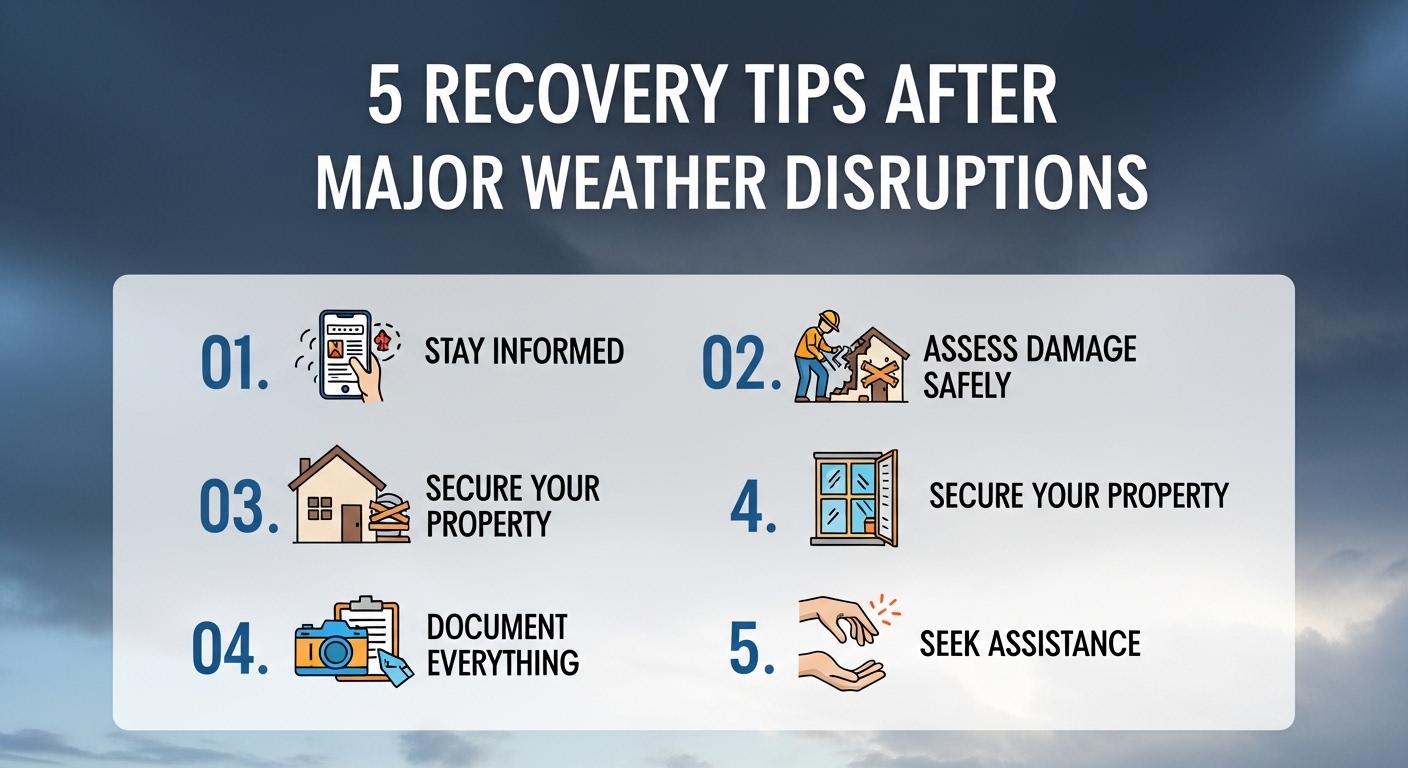
When the skies finally clear and the winds die down, the silence left in the wake of a major weather event can feel just as overwhelming as the storm itself. Whether it was a severe blizzard, torrential flooding, or hurricane-force winds, the immediate aftermath of a natural disaster brings a unique set of challenges. It is a moment where adrenaline fades and the reality of recovery begins to set in.
Navigating the path to normalcy is rarely a straight line. It involves assessing safety, managing insurance complexities, and tackling physical repairs. However, knowing where to start can significantly reduce the stress of the situation. By breaking the recovery process down into manageable steps, you can protect your property and your peace of mind. Here are five essential tips to help guide you through the recovery process after a major weather disruption.
1. Prioritize Safety Assessments Before Re-Entry
The most critical step in recovery happens before you even pick up a broom or a hammer. Safety must be the absolute priority. Just because a storm has passed does not mean the danger is over. Structural integrity can be compromised in ways that aren’t immediately visible to the untrained eye.
Before entering your home or business, perform a visual inspection from the outside. Look for loose power lines, gas leaks (often detectable by smell), or shifting foundations. Inside, be wary of sagging ceilings which may indicate water retention or structural weakness. If there is standing water, do not enter until you are certain the power has been cut off to avoid electrocution. If you have any doubts about the stability of the building, wait for a professional inspection. It is always better to delay re-entry than to risk injury.
2. Document Everything for Insurance Claims
Once it is safe to assess the damage, your phone’s camera becomes your most valuable tool. The insurance claims process can be lengthy and requires detailed proof of loss. Before you begin moving debris or making temporary repairs, you must document the scene exactly as you found it.
Take wide-angle photos of entire rooms and close-ups of specific damage to walls, floors, appliances, and personal belongings. Make a detailed inventory list that includes the date of purchase and the approximate value of ruined items, if possible. Do not throw away damaged items immediately; keep them until an adjuster has seen them or given you the go-ahead to discard them. This thorough documentation acts as your evidence, ensuring you receive the full coverage you are entitled to under your policy.
3. Mitigate Further Damage Immediately
After documentation, the focus shifts to “stopping the bleeding.” Most insurance policies require homeowners to take reasonable steps to prevent further damage. This doesn’t mean completing major repairs, but rather securing the property against the elements.
This might involve boarding up broken windows to prevent rain from entering, placing tarps over holes in the roof, or extracting standing water to prevent mold growth. If you leave a property exposed and a secondary rainstorm causes more ruin, your insurance might not cover that additional damage. Keep all receipts for materials purchased for these temporary fixes—lumber, tarps, nails, or dehumidifiers—as these costs are typically reimbursable.
4. Know When to Call Professionals
While the DIY spirit is commendable, major weather events often cause damage that exceeds the capabilities of a standard homeowner. Attempting to fix complex issues like electrical wiring, sewage backups, or major structural framing can be dangerous and may violate local building codes.
For extensive destruction, relying on certified experts is crucial. For example, if you are dealing with downed trees on structures, compromised roofing, or massive flooding, you need specialized equipment and expertise. Residents in areas prone to harsh weather often find that professional services are indispensable. If you require storm damage cleanup in Salt Lake City, hiring a specialized restoration team ensures that water is properly extracted and that structural drying is handled correctly to prevent long-term issues like black mold or dry rot.
5. Focus on Mental and Emotional Recovery
Finally, it is vital to acknowledge the toll a disaster takes on your mental health. Property can be repaired, but the stress and trauma of living through a major weather disruption are real. It is easy to get caught up in the logistics of contractors and claims, neglecting your own well-being in the process.
Take breaks. Lean on your community. Don’t hesitate to seek support if you are feeling overwhelmed. establishing a routine, even a small one, can provide a sense of control when everything else feels chaotic. Remember that recovery is a marathon, not a sprint. By pacing yourself and prioritizing your mental health, you will be better equipped to make the important decisions required to rebuild your home and your life.
Moving Forward with Resilience
Recovering from severe weather is undoubtedly a challenge, but it is one that can be managed with a strategic approach. By putting safety first, meticulously documenting loss, mitigating immediate risks, knowing when to call in the experts, and taking care of your mental well-being, you can navigate the aftermath with confidence. These steps not only help restore your property but also help restore your sense of security, allowing you to move forward and rebuild stronger than before.