

The modern fan experience has evolved dramatically over the last decade. Whether attending a high-stakes football match or a massive industry trade show, visitors expect more than just a seat and a view. They demand a seamless, hyper-connected digital environment that rivals the comfort and speed of their home offices and living rooms. For venue operators, meeting these expectations is no longer just a luxury—it is a necessity for survival in a competitive entertainment market.
From the moment a ticket is purchased to the final whistle or keynote speech, technology underpins every interaction. Large-scale venues face unique challenges due to the sheer density of people and data, requiring robust infrastructure that can handle massive surges in usage. To stay ahead of the curve, stadium and convention center managers must prioritize specific technological upgrades that enhance safety, efficiency, and engagement. Here are the six critical technology needs that are defining the future of large-scale venues.
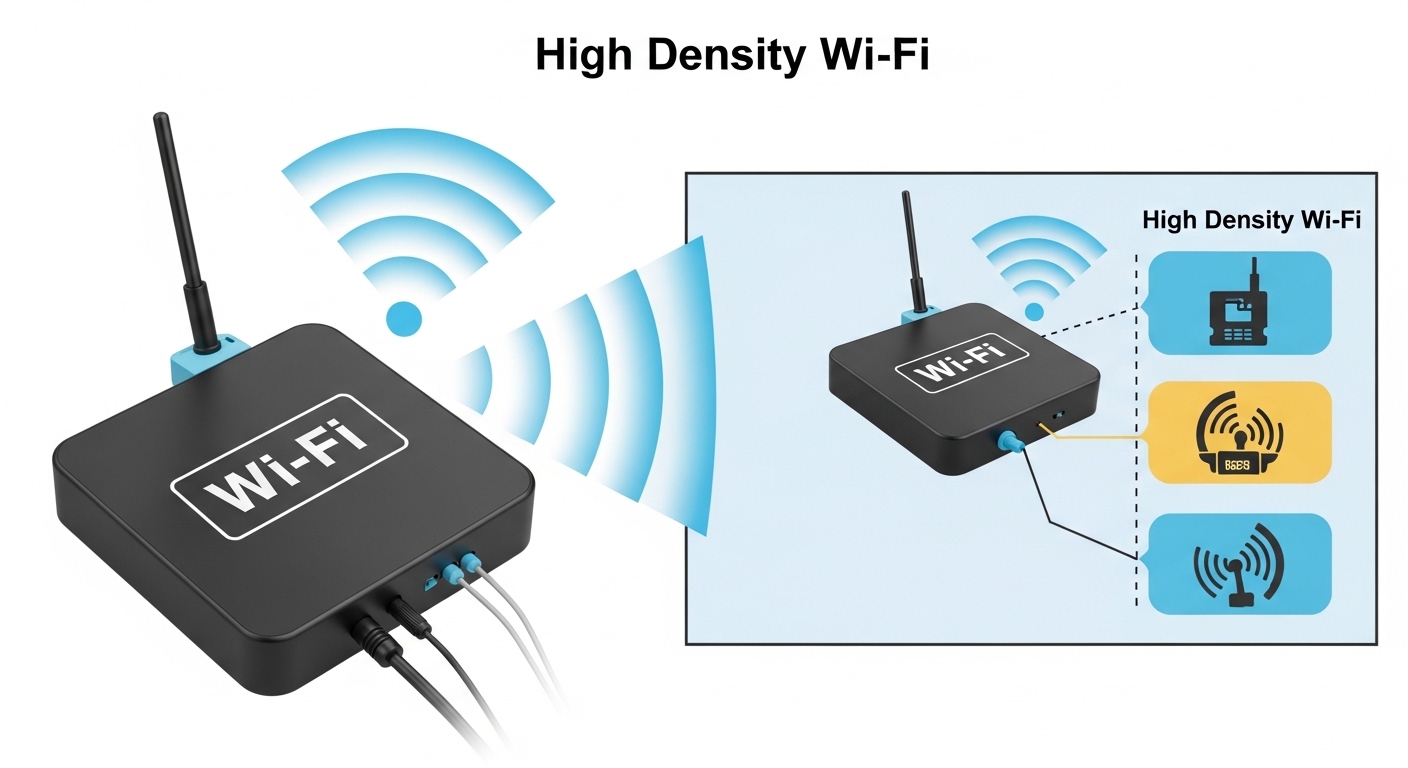
1. High-Density Wi-Fi 6 and 5G Connectivity
The most fundamental requirement for any modern venue is connectivity. When tens of thousands of people gather in a single location, the strain on cellular networks can be immense. Visitors today expect to stream video, upload high-resolution photos to social media, and communicate with friends in real-time without buffering or lag.
To support this “second screen” experience, venues are increasingly deploying Wi-Fi 6 and private 5G networks. Unlike previous generations of Wi-Fi, Wi-Fi 6 is designed specifically for high-density environments, allowing more devices to connect simultaneously without degrading speed. 5G adds another layer of capability, offering ultra-low latency that supports real-time applications like augmented reality (AR) and instant replays on mobile devices. Without this backbone, other digital initiatives simply cannot function effectively.
2. Robust Cloud Infrastructure
As venues become smarter, they generate massive amounts of data. This ranges from point-of-sale transaction logs and ticketing data to real-time security footage and environmental controls. Storing and processing this data on-site can be costly and inefficient, which is why robust cloud connectivity is becoming a cornerstone of venue operations.
By leveraging the cloud, venue operators can centralize their data management, allowing for real-time analytics that can improve decision-making on the fly. For example, cloud-based systems can analyze crowd flow data to alert staff to open new concession stands or redirect foot traffic to alleviate congestion. Furthermore, a strong cloud strategy ensures that all integrated systems—from lighting to security—communicate flawlessly with one another, creating a unified operational ecosystem rather than a collection of siloed tools.
3. Contactless Entry and Payment Systems
The demand for frictionless experiences has accelerated the adoption of contactless technology. Long lines at ticket turnstiles and concession stands are major pain points that can ruin a guest’s experience. To combat this, stadiums and convention centers are implementing Near Field Communication (NFC) technology and biometric entry systems.
Digital ticketing allows guests to tap their phones for entry, reducing bottlenecking at the gates. Inside the venue, cashless payment systems speed up transactions significantly. Some forward-thinking venues are even introducing “just walk out” technology in retail stores, where computer vision tracks what a customer picks up and automatically charges their account, eliminating the checkout line entirely. This not only improves the fan experience but also increases revenue by processing more transactions per hour.
4. Digital Signage and Dynamic Wayfinding
Navigating a sprawling convention center or a massive stadium can be confusing. Static maps and printed signs are quickly becoming obsolete, replaced by high-definition digital signage and IPTV (Internet Protocol Television) networks. These screens do far more than just display menus or directions; they are dynamic communication tools.
Digital signage can be updated instantly to reflect real-time changes, such as a gate change for an event or an emergency evacuation route. In terms of revenue, these screens offer prime real estate for dynamic advertising, allowing sponsors to target specific audiences at specific times. Furthermore, wayfinding apps integrated with venue beacons can provide turn-by-turn navigation on a user’s smartphone, guiding them directly to their seats or the nearest restroom with ease.
5. Advanced Security and Crowd Intelligence
Safety is paramount in large venues. Traditional security measures are being augmented with sophisticated technology designed to predict and prevent incidents before they occur. Modern surveillance systems now utilize AI-driven video analytics to monitor crowd density and detect anomalies, such as unattended bags or sudden disturbances in the crowd.
Beyond emergency security, this technology helps with operational efficiency. Crowd intelligence software can analyze movement patterns to help organizers understand how people navigate the space. This insight is invaluable for convention centers looking to optimize floor plans for exhibitors or for stadiums trying to manage exit flows after a game. By understanding the physical behavior of the crowd, operators can create a safer and more comfortable environment for everyone.
6. Immersive Fan Engagement Platforms
Finally, technology is blurring the line between the physical and digital worlds to create immersive experiences. Venues are launching proprietary mobile apps that serve as a remote control for the live event. Through these apps, fans can order food delivered directly to their seats, listen to exclusive audio feeds of the game, or view instant replays from multiple camera angles.
Augmented Reality (AR) is also gaining traction. Imagine pointing your phone at the field and seeing player stats hovering over the athletes in real-time, or pointing it at a convention booth to download a digital brochure instantly. These immersive technologies deepen the connection between the attendee and the event, turning a passive observer into an active participant.
The stadium and convention center of the future is a digital fortress, built upon layers of sophisticated technology designed to streamline operations and delight visitors. From the invisible backbone of cloud computing to the visible flash of digital signage, these investments are essential for creating world-class experiences. As attendee expectations continue to rise, the venues that prioritize these technological needs will be the ones that fill their seats and keep crowds coming back for more.
 admin
admin