

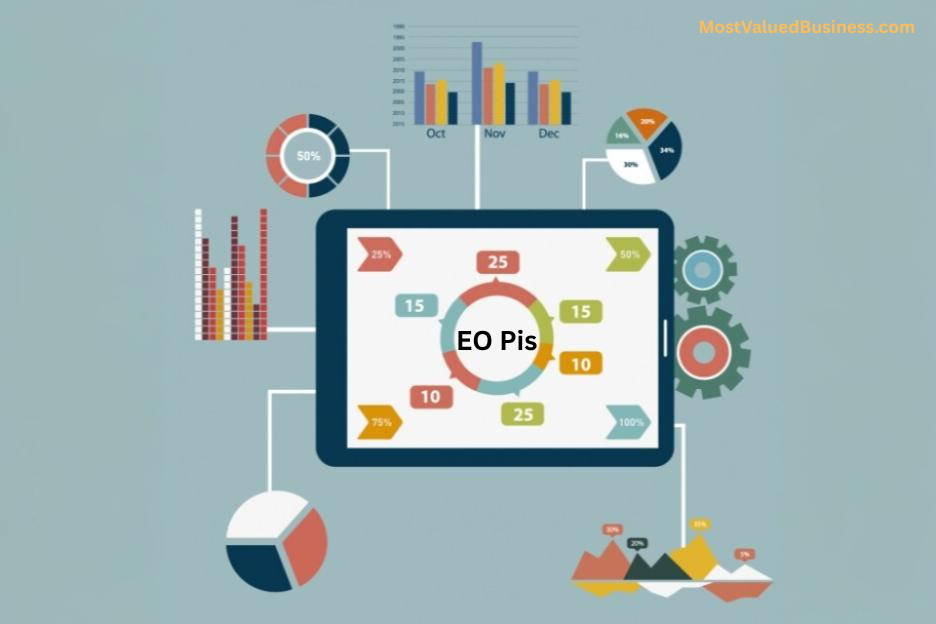
EO PIS: Meaning, Benefits, Implementation & Best Practices for Modern Organizations
EO PIS is one of those business terms that sounds more complicated than it really is. At its core, it describes a structured way for organizations to collect performance data, make sense of it, and use it to make better decisions. Whether you expand it as an Executive Performance Insight System or an End-of-Period Information System, the purpose stays the same: turning scattered numbers into clear, trustworthy insight that leaders can act on.
What Does EO PIS Mean?
EO PIS refers to a system — part process, part technology — that pulls together performance information from across a business and presents it in a form executives can actually use. Instead of juggling disconnected spreadsheets and KPIs that nobody quite trusts, an EO PIS creates one shared, reliable view of how the organization is doing. For a deeper look at how structured explainers break down complex topics, see our Babeltee explained guide.
The Main Benefits of EO PIS for Modern Organizations
The biggest benefit is decision speed. When leaders trust their numbers, they stop delaying choices. A well-run EO PIS shortens the gap between something happening in the business and leadership knowing about it. Accuracy is the second major win — by standardizing how data is collected and presented, EO PIS removes the most common sources of reporting error. There is also a cultural benefit: when every department works from the same performance language, arguments about “whose numbers are right” fade away.
EO PIS Implementation: A Practical Roadmap
First, define your reporting objectives: decide what you actually want to measure. Ten meaningful KPIs will serve you better than fifty decorative ones. Second, choose technology that fits — stable and fast enough for your reporting cycle. Third, map your data sources carefully. Fourth, integrate and test before going live. Finally, refine continuously. Curious how ambiguous modern terms evolve? Our Pabington guide explores a very different kind of modern concept.
EO PIS Quick Facts
- What it is: A system for collecting, validating, and presenting organizational performance data.
- Who uses it: Executives, finance teams, operations managers, and strategy departments.
- Main goal: Faster, more accurate, more trusted business decisions.
- Common metrics: Revenue trends, cost patterns, productivity, forecast accuracy, closing speed.
- Biggest risk: Tracking too many KPIs and skipping data validation.
Best Practices and Common Mistakes to Avoid
The golden rule is to start small and scale later. Pick a tight set of KPIs, prove the system works, then expand. Keep dashboards simple. The most damaging mistake is skipping data validation — confident decisions built on broken data are worse than slow decisions built on good data. And avoid automating too early: if your manual process produces wrong numbers, automation will simply produce wrong numbers faster.
What is the full form of EO PIS?
There is no single official expansion. It is most commonly read as Executive Performance Insight System or End-of-Period Information System. The function matters more than the letters.
Is EO PIS only for large enterprises?
No. Small and mid-sized businesses benefit from the clarity and discipline it brings. Starting simple early prevents reporting chaos later.
How long does EO PIS implementation take?
A focused implementation can show results within one or two reporting cycles.
EO PIS is not magic — it is simply a more disciplined way of seeing what is really happening inside a business. For any company that wants clarity, speed, and accountability, it is one of the most practical systems worth building.