

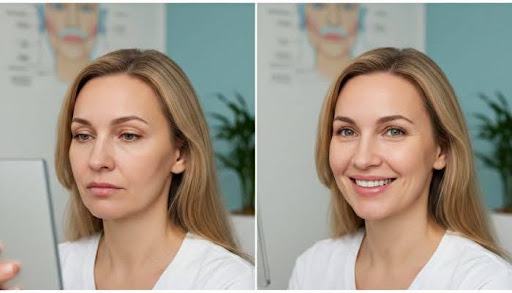
You know that moment when you catch yourself in a photo and think, “Wait, when did that happen?” Maybe your cheeks look flatter than you remember, or those under-eye shadows just won’t quit, no matter how much sleep you get. Your expensive serums worked great five years ago, but lately they seem to have hit a wall.
Here’s what most people don’t realize: creams and serums can only do so much because facial aging happens deep below where those products can reach. Surgery fixes the problem, sure, but plenty of people aren’t ready for that step. Good news exists for anyone stuck in that middle ground. Non-surgical treatments have evolved dramatically and when you combine them strategically, results can genuinely surprise you.
Let me walk you through how it all works.
Why Your Face Actually Loses Volume
So what’s really going on beneath the surface? Your face has fat pads sitting in separate little compartments, almost like sections of an orange. Starting around age thirty, these compartments begin shrinking at different rates. Some areas lose volume faster than others, which explains why aging never looks perfectly even.
But fat loss isn’t the whole story. Your actual skull shrinks over time too. Cheekbones lose some of their projection and jawlines become less defined as bone density decreases. Meanwhile, collagen production drops by roughly one percent every year and elastin loses that snap-back quality it had when you were younger.
Put all of these changes together and gravity starts winning. Deflated tissue slides downward, creating that tired, saggy look that eight hours of sleep can’t touch. Surface skincare never stood a chance against problems running this deep, which is why practitioners at clinics such as VisageSculpture focus on treating multiple facial layers rather than just the surface.
How Volume Loss Changes Your Face
So what actually happens to your face over time? Temples start hollowing out, making your face look bonier. Under-eye areas develop stubborn dark circles and puffiness that concealer barely hides. Cheek fat that once sat high starts flattening and sliding down toward your mouth. As cheeks drop, nose-to-mouth lines get deeper. Lines from the corners to the chin appear next, adding a tired look even when you feel fine.
Your jawline loses its sharp edge. Skin starts hanging slightly over the jaw, creating early jowls. Lips thin out and lose their defined borders. Young faces look like upside-down triangles with full cheeks tapering to a narrow chin. Older faces flip into square or rectangular shapes as volume shifts downward. Changes happen so slowly that you adapt daily. Then an old photo shocks you with how much actually changed.
What Facial Harmony Actually Means
People throw around words like “natural results” without explaining what that actually looks like. Facial harmony comes down to proportion and balance between features. Nothing should stick out or grab attention for the wrong reasons. Everything should flow together smoothly.
Harmonious faces let light bounce evenly across surfaces. Shadows fall in predictable, flattering places rather than pooling in hollow areas. Different facial zones transition into each other without harsh lines or sudden changes.
Your version of harmony depends entirely on your bone structure, ethnicity and natural features. Copying someone else’s face never works because their proportions aren’t yours. Overdone cosmetic work fails precisely because it ignores individual harmony. Those frozen foreheads and pillow-face cheeks scream “work done” because they break the natural flow. Real harmony means looking in the mirror and seeing a fresher version of yourself, not a different person entirely.
Why One Treatment Never Does Everything
Here’s where things get interesting. Facial aging attacks on multiple fronts at once. Skin surfaces deal with texture problems and sun damage. Middle layers lose collagen and bounce. Deep layers watch their fat pads shrink away. Bone structure quietly reduces its support from underneath.
Each layer needs something different and no single treatment handles all of them. Filler adds volume but can’t tighten loose skin. Botox smooths movement wrinkles but won’t fill in hollow cheeks. Lasers improve skin texture but can’t lift sagging tissue back into place. Every tool in the cosmetic toolbox targets specific depths and specific problems.
Using just one approach leaves other issues untreated, which is exactly why results from single treatments often look incomplete. Faces need layered solutions because aging itself attacks in layers.
How Multi-Layered Treatments Actually Work
Think of your face as having different floors in a building, each needing its own type of renovation. Smart practitioners assess each level separately before putting together any plan. They figure out which area needs the most work and what order makes sense for tackling them. Foundation work usually comes first because building on an unstable base never ends well.
Rushing through everything at once almost always backfires. Gradual building over multiple sessions looks infinitely more natural than aggressive single appointments. Spacing treatments apart gives tissues time to heal and settle before adding more. Your perfect combination will look different from someone else’s because your face aged differently from theirs did.
Fillers Restore What Time Takes Away
Hyaluronic acid fillers do the heavy lifting for volume restoration. Practitioners inject these gels beneath the skin to replace what fat pads lost over the years. Different formulations exist for different areas because one thickness doesn’t suit every location. Thicker products support cheekbones and jawlines, while softer versions work better around lips and under eyes.
Cheek filler brings back that midface projection your twenty-something self took for granted. Temple filler erases that hollow, sunken look creeping in at the sides. Under-eye filler tackles those dark troughs, making you look exhausted. Jawline filler recreates defined edges that softened years ago. Chin filler balances profiles and can reshape proportions dramatically.
You’ll see results immediately, though everything settles and refines over the following days. How long fillers last depends on where they go, which product gets used and how fast your body metabolizes them. Eight months to two years covers the typical range. Hyaluronic acid dissolves safely if anything needs adjusting, which gives nervous first-timers some peace of mind.
Botox Handles Movement-Based Wrinkles
Botulinum toxin type A blocks acetylcholine release at neuromuscular junctions. Forehead rhytides result from repetitive frontalis muscle contraction. Glabellar lines develop from procerus and corrugator supercilii activity. Periorbital rhytids originate from orbicularis oculi movement. Strategic placement can subtly elevate brow position through muscle balance. Masseter muscle relaxation reduces lower facial width in appropriate candidates.
According to the American Academy of Dermatology, results develop gradually over five to ten days, with therapeutic effects typically lasting three to four months. Relaxed muscles prevent excessive movement from displacing filler material. Neuromodulators create a smoother canvas for adjunctive treatments. Combination therapy addresses both volume deficiency and hyperfunctional musculature. Each modality handles distinct pathophysiologic mechanisms.
Threads and Devices Add Lifting Power
When sagging becomes part of the equation, lifting treatments enter the conversation. PDO threads work like tiny anchors placed beneath the skin. Small barbs along these dissolvable sutures grab sagging tissue and pull it back into better positions. Lifting effects show up immediately, which feels pretty satisfying.
Threads dissolve over several months but leave something valuable behind. Your body builds new collagen around them during the dissolving process and that collagen continues providing some lift long after the threads disappear completely.
Radiofrequency and ultrasound devices take a different approach to tightening. Heat delivered into deeper tissue triggers collagen contraction and jump-starts new collagen production. Morpheus8, Ultherapy and Thermage represent popular options you might encounter. Results from these devices build gradually over months rather than appearing right away.
Neither threads nor devices replace surgical facelifts for difficult sagging situations. But for mild to moderate looseness, they offer real improvement without operating room recovery times.
Putting Your Treatment Plan Together
Every solid plan starts with a thorough assessment. Practitioners need to evaluate each layer of concern before recommending anything specific. Photographs document starting points and honest conversations cover goals, realistic budgets and how much downtime you can handle.
Most plans start with foundational volume work first. Deep filler placement often comes before anything else, frequently paired with Botox during the same visit. Skin tightening gets scheduled after injectables have time to settle, usually a few weeks later. Threads follow once volume looks stable. Surface treatments for texture and tone typically come toward the end of the sequence.
Expect full transformations to unfold across six to twelve months rather than single marathon sessions. Rushing guarantees overcorrection and that dreaded “obviously had work done” look everyone wants to avoid. Gradual building lets you make adjustments along the way based on how your face responds.
Once you reach your goals, maintenance becomes the focus. Touch-ups spread over time stay easier and cheaper than starting over from zero repeatedly.
Criteria for Selecting Qualified Practitioners
Medical credentials demonstrate wide variation within aesthetic medicine. Board-certified dermatologists or plastic surgeons possess comprehensive anatomical training. Inquiring about monthly procedure volumes reveals experience levels. Requesting before-and-after galleries of actual patients provides realistic expectation setting. Evaluating whether results align with your aesthetic sensibility proves crucial. Some practitioners demonstrate heavy-handed approaches, while others specialize in imperceptible enhancement.
Consultations should feel thorough and educational rather than transactional. Qualified physicians listen actively before recommending specific interventions. Practitioners pushing unnecessary treatments warrant immediate skepticism. Promises that sound too good to be true indicate inexperience or unethical practice. Pricing significantly below market rates typically signals limited expertise. Trust your intuition during initial meetings. This professional relationship represents a long-term partnership.
Conclusion
Volume loss constitutes the primary driver of facial aging manifestations. Effective rejuvenation requires addressing multiple tissue planes simultaneously. Combination protocols restore natural harmony through scientific layering. No single modality comprehensively reverses multi-factorial aging. Selecting appropriately trained and experienced physicians determines outcome quality.
Patience throughout the process yields the most authentic improvements. Non-surgical technology advances continuously with robust clinical validation. Increasing numbers of patients elect these strategic approaches over surgical options. Your face deserves thoughtfully customized, evidence-based care. Scheduling a detailed consultation represents the essential first step toward achieving natural restoration.
 Hellen Reta