

In the evolving landscape of community safety and private security, the tools of the trade are undergoing a significant shift. For decades, the standard approach to patrolling residential neighborhoods, municipal parks, and industrial compounds relied on two extremes: the slow, limited range of foot patrols, or the highly visible, noisy presence of gas-powered vehicles.
However, a new operational gap has emerged. Modern security demands a solution that is faster than a runner but quieter than a cruiser; agile enough to navigate narrow alleyways but powerful enough to respond to emergencies. This specific tactical requirement is driving the rapid adoption of the high-performance electric dirt bike within the security sector.
The Tactical Deficit of Traditional Patrols
To understand the shift, one must first analyze the limitations of legacy methods. Traditional patrol cars are restricted to paved roads. In a large park or a gated community with winding walking paths, a car is effectively blind to 80% of the terrain. Furthermore, the acoustic signature of an internal combustion engine is a tactical liability. The sound of a patrol car approaching acts as an early warning system for vandals or intruders, allowing them ample time to hide or flee before the security officer establishes visual contact.
On the other end of the spectrum, foot patrols offer stealth but lack rapid response capabilities. If an incident occurs on the other side of a sprawling estate, a guard on foot is physically incapable of arriving in time to intervene.
The “Stealth” Advantage: Acoustic Superiority
The most profound advantage of the electric motorcycle in a security context is silence. Unlike gas engines, which generate noise pollution and vibration, electric powertrains operate with a near-silent hum.
This “acoustic stealth” fundamentally changes the nature of surveillance. It transforms the patrol officer from a passive deterrent into an active observer. A security guard on an electric bike can move through a neighborhood at 20 mph without waking residents or alerting potential wrongdoers. This capability allows for “surprise inspections” of high-risk areas—such as park pavilions or secluded parking lots—where illicit activity often occurs under the cover of darkness. The element of surprise is a powerful tool in crime prevention, and silence is the key to maintaining it.
Navigating the “Grey Zones”
Every secured environment has “grey zones”—areas that are difficult to access and monitor. These include narrow pedestrian bridges, wooded trails, tight alleyways between buildings, and steep grassy embankments.
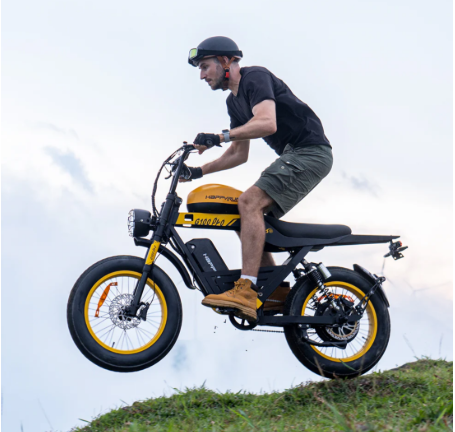
An electric dirt bike is uniquely suited to conquer these zones. Its slim profile allows it to bypass bollards and gates that stop cars. Its suspension system is designed to handle curbs, stairs, and rough terrain that would destroy a standard bicycle or golf cart. This agility ensures that there are no “safe havens” for criminal activity. When a security force can patrol the paved road and the forest trail with the same vehicle, the security net becomes much tighter.
Improving Officer Situational Awareness
Beyond the physical capabilities of the vehicle, the switch to electric mobility enhances the sensory performance of the human operator. Riding a loud gas motorcycle requires the rider to filter out engine noise, which often masks subtle environmental cues.
On an electric bike, the rider’s auditory senses are unencumbered. An officer can hear the sound of breaking glass, distant footsteps, or a hushed conversation while in motion. This heightened situational awareness (SA) is critical for night patrols, where vision is limited, and sound becomes a primary method of detection.
Economic and Environmental Efficiency
For Homeowners Associations (HOAs) and municipal departments, the decision to upgrade a fleet is often financial. Here, the data supports the transition to electric mobility.
- Operational Costs: The cost per mile of electricity is a fraction of gasoline.
- Maintenance: Electric motors have practically no moving parts compared to combustion engines. There are no oil changes, spark plugs, or transmission fluid replacements. This results in higher fleet uptime and lower long-term maintenance budgets.
- Community Image: Using zero-emission vehicles projects a modern, eco-conscious image. In parks and residential areas, residents appreciate that their safety does not come at the cost of air pollution or noise disturbance.
Selecting the Right Hardware: A Technical Standard
Not all electric bikes are suitable for this demanding role. A security-grade vehicle must bridge the gap between a consumer e-bike and a tactical motorcycle. It requires specific attributes: high torque for climbing, a robust suspension for durability, and sufficient battery capacity to last a full 8-10 hour shift without downtime.
Case Example: The High-Performance Standard When sourcing equipment for these tasks, agencies look for models that combine range with heavy-duty construction. A relevant example in the current market is the HappyRun G100Pro. Unlike standard recreational bikes, this model offers a 6000W motor and a dual-battery system, providing the necessary torque for rapid response and the endurance to cover long patrol loops without recharging. Its specifications—specifically the fat tires and full suspension—illustrate the type of industrial build quality required to handle the daily abuse of curb-hopping and off-road surveillance, ensuring the vehicle remains a reliable asset rather than a maintenance liability.
The Psychological Impact: Community Policing
Finally, there is a psychological component to the vehicle choice. A patrol car with rolled-up windows creates a barrier between the security officer and the community. It can feel impersonal and militaristic.
An officer on an electric bike is exposed and approachable. This visibility fosters “community policing.” Residents walking their dogs or children playing in the park are more likely to wave at or speak to an officer on a bike. This rapport builds trust. When the community knows and trusts their security team, they are more likely to report suspicious behavior, creating a collaborative safety environment.
Conclusion
The future of neighborhood and park security is not about bigger fences or faster cars; it is about smarter mobility. The electric dirt bike represents a tactical evolution, offering a blend of stealth, speed, and accessibility that legacy vehicles cannot match.
By adopting these silent, efficient machines, security teams are doing more than just saving on gas money. They are improving their response times, eliminating blind spots in their coverage, and operating in a way that respects the peace and quiet of the communities they serve. In the business of protection, the ability to be everywhere without being heard is the ultimate advantage.
 admin
admin