

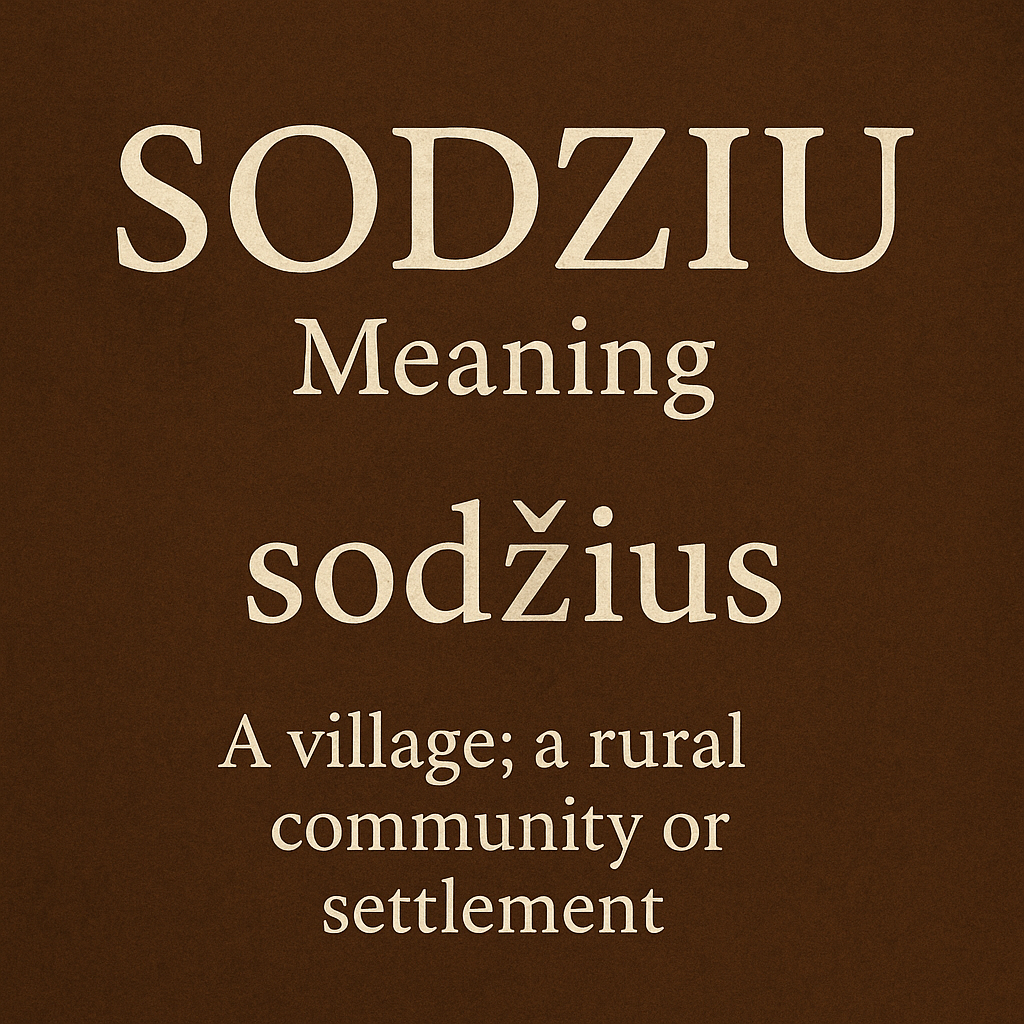
Sodziu Meaning: The Word That Says More Than It Actually Says
At first glance, “sodziu” looks like a simple word. But spend a minute with it and you realize it carries far more weight than its translation suggests. People keep searching for the sodziu meaning because the feeling behind the word is bigger than the dictionary definition. It points to village life, countryside roots, old dirt roads, and family homesteads. For Lithuanians, sodžius is not just a place on a map — it is where everything started.
What Does “Sodziu” Actually Mean?
Let’s start with the basics: sodžius literally means “village,” “rural homestead,” or “countryside settlement.” Simple enough. But you will also see several spellings floating around — sodžius, sodžiu, and sodziu — and each one is used in a slightly different context. The first is the proper Lithuanian dictionary form. The second is a grammatical case form. The third is the English-friendly spelling people use when their keyboard refuses to cooperate with diacritics. Native speakers understand all three, so use whichever version works for you.
The root of the word is sodas, meaning “garden,” “orchard,” “settlement,” or “cultivated land.” That already tells you everything: Lithuanian villages did not appear by accident. They grew around gardens and land that families cared for because their entire existence depended on it.
Sodziu as Lithuanian Cultural Identity
Here is where the word gets emotional. Ask any Lithuanian what sodžius feels like — not means, feels like — and they will tell you about home. Childhood summers. Grandparents who kept everything alive with their hands. A sense of belonging that cities cannot fake.
- Literal meaning: village, rural homestead, countryside settlement
- Language: Lithuanian (proper form: sodžius)
- Root word: sodas — garden, orchard, cultivated land
- Cultural weight: home, heritage, belonging, nostalgia
- Common misspelling: “sodziu” (diacritics dropped for English keyboards)
Historically, a sodžius was a cluster of wooden homes surrounded by barns, gardens, and orchards. Like the term quartist, which took on a deeper cultural meaning beyond its literal definition, sodziu became shorthand for an entire way of life.
Sodziu vs Similar Lithuanian Words
Lithuanian has plenty of rural vocabulary. Sodžius means a village or community settlement — the whole place. Sodyba is different: it means a homestead, farmhouse, or individual property — one family’s land, not the village. Kaimas is the broader, more general word for village or countryside.
Modern Usage and Common Misunderstandings
Older Lithuanians still say sodžius when talking about their home village. Younger people sometimes use it jokingly. Expats use it with genuine longing. The word is alive, not a museum piece. Some corners of the internet have started using “sodziu” as slang — which makes actual Lithuanian speakers squint. A few people also confuse it with kaimas or assume it is just “village” with extra steps. It is not.
Is sodziu a slang word?
Traditionally, no. It is a legitimate Lithuanian noun meaning village or rural homestead. Some online communities use it informally, but that is not its authentic meaning.
What is the correct spelling — sodziu or sodžius?
Sodžius is the proper Lithuanian form. “Sodziu” is the internet-friendly version without diacritics. Both are understood by native speakers.
Is sodziu the same as sodyba?
No. A sodžius is a village or community settlement, while a sodyba is an individual homestead or farmhouse.
Sodziu is not just a cute rural term. It is a piece of Lithuanian identity wrapped into a single word. If you enjoy unpacking words with hidden depth, you may also like our guide to what quartist means in modern creative culture.