

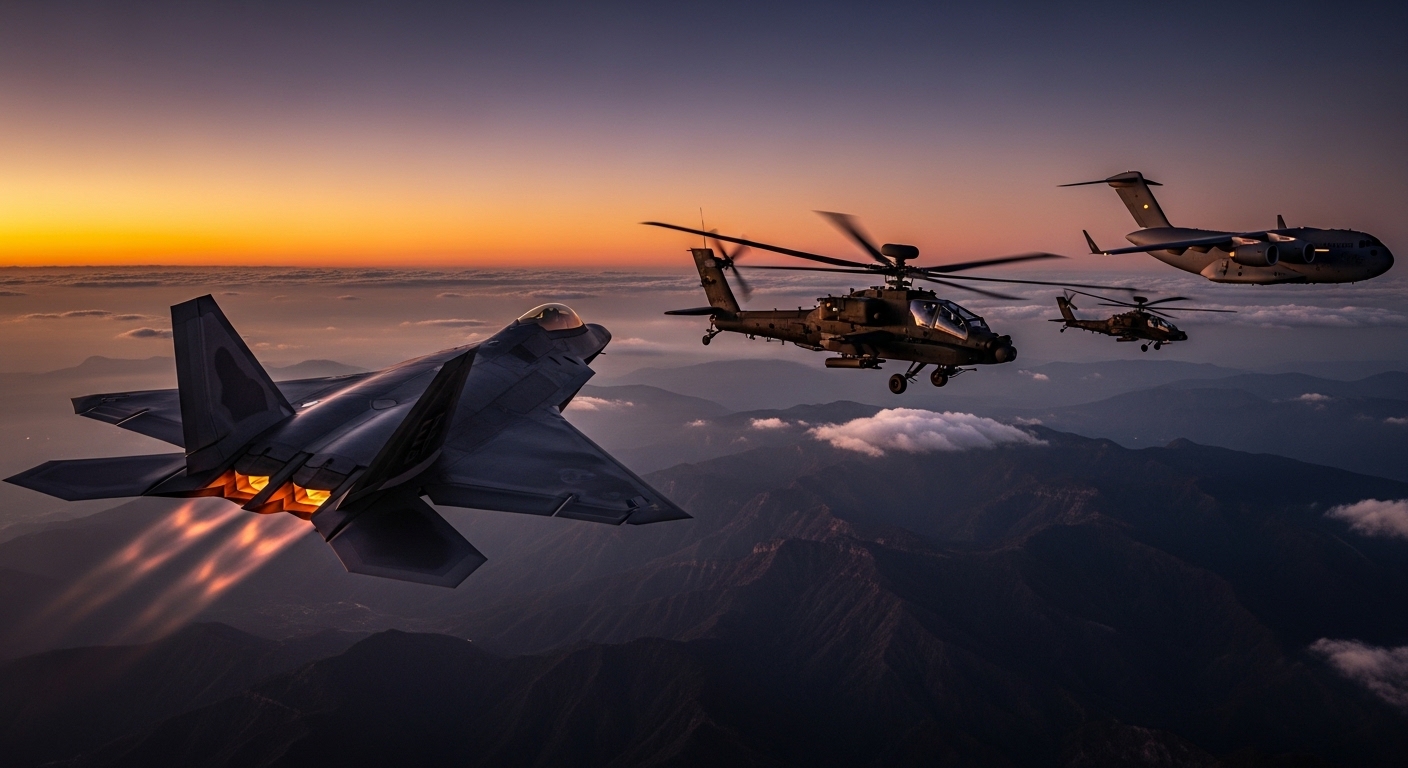
Modern military aircraft represent the pinnacle of engineering, combining speed, stealth, firepower, and advanced technology to dominate the skies. As global security challenges evolve, air forces around the world continue to invest heavily in aircraft that can adapt to complex missions ranging from air superiority and precision strikes to intelligence gathering and deterrence. Below is a look at some of the best military aircraft in the world today and what makes them stand out in modern warfare.
F-22 Raptor (United States)
The F-22 Raptor remains one of the most formidable fighter jets ever built. Designed primarily for air superiority, it blends stealth, supercruise (sustained supersonic flight without afterburners), and exceptional maneuverability. Its advanced radar and sensor fusion allow pilots to detect and engage enemies long before being seen. Although production ended years ago, the F-22 still sets the benchmark for dominance in aerial combat.
F-35 Lightning II (United States and Allies)
The F-35 Lightning II is a multi-role stealth fighter designed to operate across air, land, and sea-based missions. What makes the F-35 unique is its ability to gather, process, and share battlefield data in real time. This aircraft excels not just as a fighter, but as a flying command-and-control hub. Variants of the F-35 are used by multiple allied nations, making it one of the most widely adopted advanced military aircraft today.
Su-57 Felon (Russia)
Russia’s Su-57 is a fifth-generation stealth fighter designed to compete with Western counterparts. It emphasizes agility, speed, and advanced avionics, making it effective in both air-to-air and air-to-ground roles. While its stealth characteristics differ from U.S. designs, the Su-57 focuses on supermaneuverability and powerful engines, reflecting Russia’s distinct approach to air combat.
Chengdu J-20 Mighty Dragon (China)
China’s J-20 is a rapidly evolving stealth fighter that demonstrates the country’s growing aerospace capabilities. Built for long-range operations, the J-20 is believed to prioritize beyond-visual-range combat and strategic interception. With continuous upgrades in avionics and engines, the J-20 plays a central role in China’s push for regional air superiority.
B-2 Spirit (United States)
When it comes to strategic bombing, few aircraft are as iconic or effective as the B-2 Spirit. Its flying-wing design and advanced stealth allow it to penetrate heavily defended airspace undetected. Capable of carrying both conventional and nuclear payloads, the B-2 serves as a critical component of long-range strike and deterrence strategies. Despite its age, ongoing upgrades keep it highly relevant.
B-21 Raider (United States)
The B-21 Raider represents the next generation of stealth bombers. Designed to replace older platforms, it emphasizes adaptability, reduced maintenance costs, and advanced stealth technologies. While still entering service, the B-21 is expected to redefine strategic bombing for decades, ensuring continued dominance in long-range precision strikes.
Eurofighter Typhoon (Europe)
Developed by a consortium of European nations, the Eurofighter Typhoon is a highly versatile, multi-role fighter. It excels in air-to-air combat but is equally capable of ground attack missions. Continuous upgrades to its radar, weapons systems, and electronic warfare capabilities keep it competitive against newer aircraft.
Dassault Rafale (France)
The Rafale is known for its reliability, flexibility, and strong performance across multiple mission types. It has proven itself in real-world combat operations and is favored by several international buyers. Its design emphasizes ease of maintenance, robust systems, and adaptability, right down to critical components such as aircraft fasteners that must withstand extreme conditions.
Why These Aircraft Matter
The best military aircraft in the world today are not just about speed or firepower. They represent integrated systems where stealth, sensors, communication, and pilot support work together seamlessly. These aircraft provide nations with deterrence, rapid response capability, and strategic advantage in an increasingly complex global landscape.
As technology continues to advance, future military aircraft will likely focus even more on unmanned teaming, artificial intelligence, and network-centric warfare. For now, the aircraft listed above stand at the forefront of modern air power, shaping how conflicts are deterred and, when necessary, fought in the skies.