

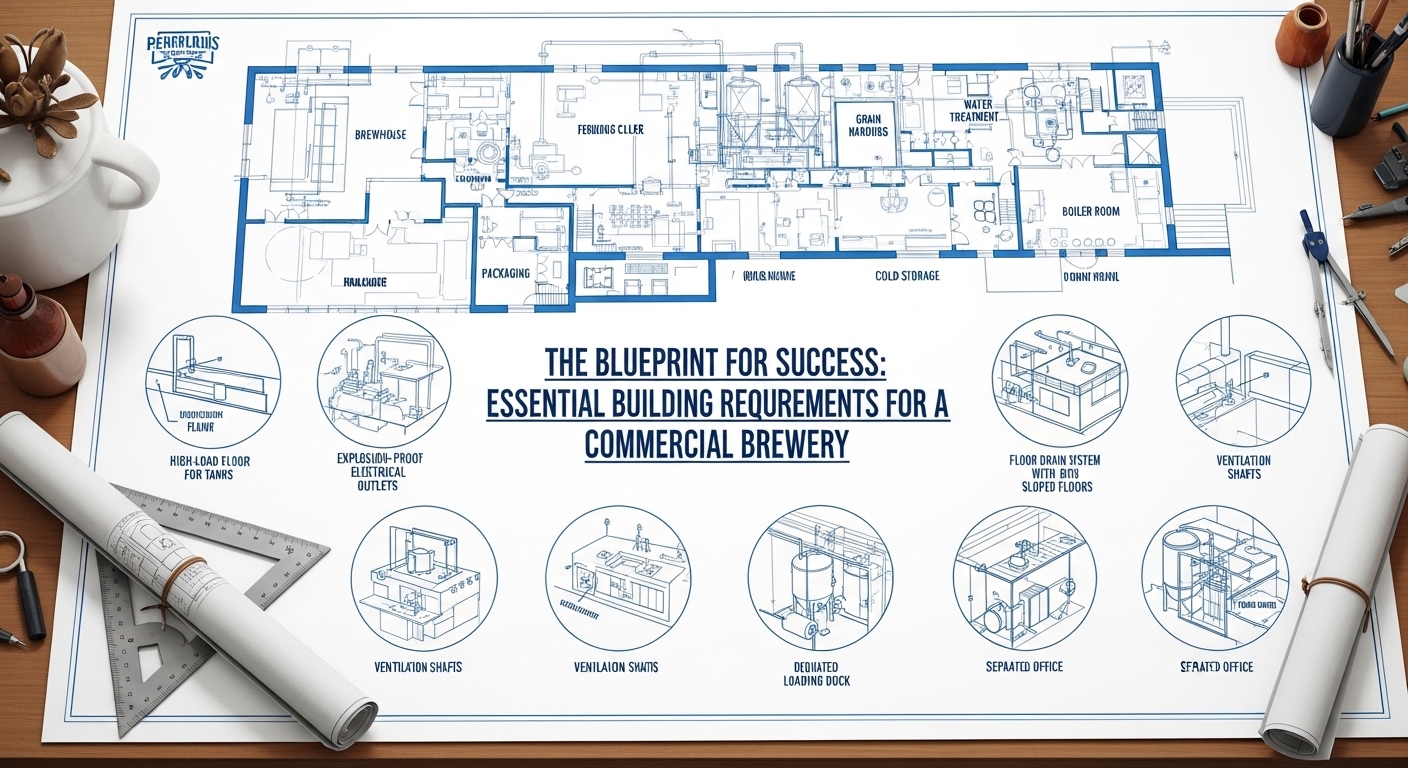
Launching a commercial brewery is a high-stakes endeavor where the physical structure of your building often dictates your long-term profitability. Whether you are retrofitting an existing warehouse or embarking on a new build, the technical demands of a production facility are vastly different from standard retail or office spaces.
In my experience overseeing projects ranging from 1BBL pilot systems to 50BBL industrial plants, the most expensive setbacks rarely come from the brewing process itself—they stem from building limitations. This guide outlines the structural, utility, and regulatory pillars necessary to create a production-ready environment.Micet Craft Brewing Equipment Manufacturers
1. Zoning and Classification: Is Your Building “Brewery-Ready”?
A commercial brewery is more than a taproom; it is a food-grade manufacturing plant. Consequently, it falls under light-to-medium industrial zoning. Before signing a lease or purchasing land, you must ensure the local municipality permits alcohol production, high-volume wastewater discharge, and the operation of industrial boilers.
Critical Compliance Checks:
- Industrial Zoning: Ensure the site is cleared for manufacturing.
- Fire Department Approval: Pressure vessels and CO₂ storage require specific safety clearances.
- Environmental Regulations: Verify there are no restrictions on odors (hops/boiling), noise, or wastewater temperature.
2. Strategic Space Planning: More Than Just Square Footage
One of the most frequent mistakes is underestimating the “footprint” of growth. While a brewhouse stays the same size, your fermentation cellar and cold storage will expand rapidly as you scale.
Pro Tip: Always plan for 30–40% more space than your initial year-one projections. You will need buffer zones for packaging lines, grain silos, and forklift maneuverability.
3. Floor Load Capacity and Structural Integrity
Brewing equipment is deceptively heavy. A single 20BBL fermenter filled with beer can exert a point load of over 8 tons. Standard warehouse slabs were often never designed for the concentrated weight of liquid-filled pressure vessels.
Structural Needs:
- Reinforced Concrete: Slabs usually require a rating of 3,000–4,000 PSI or higher.
- Point Load Engineering: A structural engineer must verify that the floor won’t crack under the specific foot-load of your tanks.
- Protective Coatings: Use acid-resistant urethane cement to prevent beer and cleaning chemicals from eroding the concrete.
4. Ceiling Heights and Vertical Scalability
Ceiling height is the invisible ceiling on your business growth. Taller tanks are significantly more cost-effective than buying multiple small, squat tanks.
- Minimum Clearance:5 meters for small setups.
- Professional Standard: 6–8 meters for commercial production.
Vertical space is required not just for the tank height, but for CIP (Clean-In-Place) spray balls, steam exhaust ducting, and the ability to safely access manways for dry-hopping.
5. Water, Drainage, and Wastewater Management
A brewery is essentially a water-processing plant. For every liter of beer you brew, you will likely use 4 to 7 liters of water for mashing, cooling, and cleaning.
Drainage Essentials:
- Floor Sloping: A 1–2% pitch toward drains is mandatory to prevent standing water.
- Trench Drains: High-capacity stainless steel trench drains should run the length of the brewhouse and cellar.
- Wastewater Pre-treatment: Most cities require a pH neutralization system to ensure your discharge doesn’t damage municipal pipes.
6. Electrical and Utility Infrastructure
Modern breweries are power-hungry. From the glycol chillers that keep your beer cold to the grain augers and automated control panels, your electrical service must be robust.
- Three-Phase Power: Essential for running large motors and chillers efficiently.
- Service Rating: Depending on size, 200A to 800A is typical.
- Thermal Utilities: You must choose between natural gas-fired boilers (for steam systems) or high-amperage electrical panels for direct-heat systems.
7. Ventilation and Heat Control
The brewing process generates immense amounts of steam, humidity, and CO₂. Without industrial-grade ventilation, your building will quickly succumb to mold and structural corrosion.
- Steam Hoods: Must be positioned directly above the brew kettle with high-CFM exhaust fans.
- Makeup Air: To prevent a vacuum, the building must have a “makeup air” unit to replace the air being exhausted.
- CO₂ Monitoring: Safety sensors are vital in low spots (like pits or cold rooms) where CO₂ can settle and become a breathing hazard.
8. Optimal Layout and Workflow
A profitable brewery is designed for a one-way workflow. Raw ingredients (grain) enter at one end, move through the brewhouse and cellar, and exit through packaging and shipping at the other. Crossing paths leads to contamination risks and labor inefficiencies.
- Hot vs. Cold Zones: Keep the heat of the brewhouse away from the energy-intensive cooling of the fermentation cellar.
- CIP Access: Ensure cleaning skids have clear paths to every tank in the building.
Strategic Recommendation: Micet Brewing Equipment
The most successful brewery builds are those where the equipment is designed to fit the building’s unique constraints—not the other way around. Micet Brewing Equipment (Micet Group) specializes in this level of integration.
With over 40 years of combined process engineering experience, Micet provides more than just stainless steel. They offer a comprehensive suite of services including:
- Custom Tank Geometries: Designing taller or wider tanks to maximize your specific ceiling height and floor PSI.
- Utility-Matched Systems: Engineering brewhouses that operate within your building’s existing gas or electrical limits.
- Full 3D CAD Planning: Visualizing the workflow, drainage, and utility drops before a single bolt is turned.
By choosing Micet, you are partnering with a manufacturer that ensures your equipment, building, and workflow function as a single, high-efficiency machine.
 admin
admin