

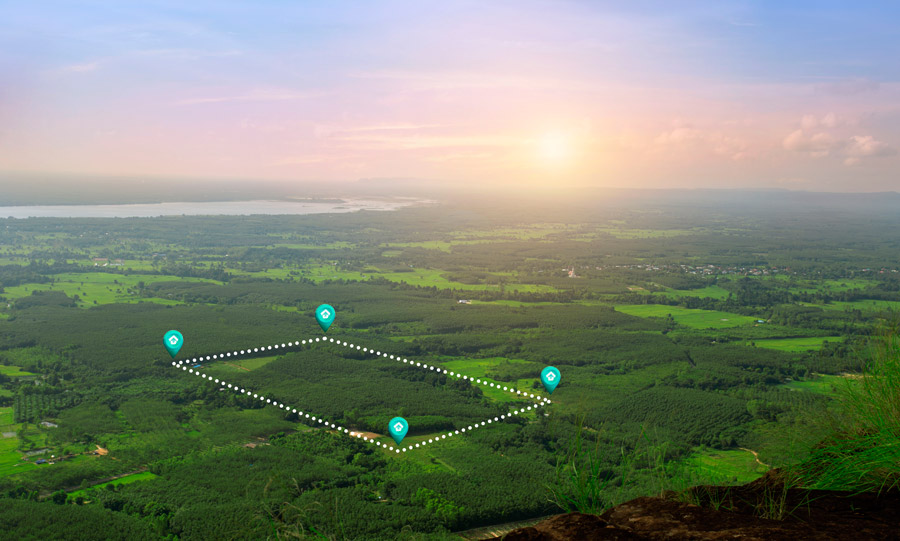
Most property owners think about their land in terms of what it looks like rather than what it requires. A property covered in dense brush and overgrown trees may look natural and untouched, which carries its own appeal, but that same overgrowth creates conditions that accumulate risk in ways that are not immediately visible and that become significantly more expensive to address the longer they are left unmanaged. Land care is not about imposing a manicured aesthetic on natural terrain. It is about understanding what an unmanaged landscape is actively doing and making deliberate decisions about which of those processes to allow and which to interrupt before they create problems that go well beyond the cost of prevention.
Homeowners and landowners who approach land care in Colorado proactively consistently spend less over time than those who address it reactively, not because proactive care eliminates every problem but because it prevents the compounding that turns manageable conditions into major projects. Proper land care covers a range of services from wildfire mitigation and brush clearing to forestry mulching and tree removal, and understanding what each involves and when each is appropriate helps property owners make informed decisions rather than simply responding to whatever situation has reached the point of demanding immediate attention.
Bear Claw Land Services works with residential landowners, commercial developers, ranches, and government agencies on land care projects that range from single-acre residential properties to multi-hundred-acre land clearing and fire mitigation projects, bringing the specialized equipment and expertise that effective land management at any scale requires.
Wildfire Mitigation and Why It Cannot Be Deferred
Wildfire mitigation is the land care category where the consequences of deferred action are most severe and most irreversible. A property with dense vegetation, accumulated dead material, and trees growing in close proximity to structures creates a fire environment that, once ignited, moves faster and burns hotter than a property where mitigation work has created the defensible space and reduced fuel loads that slow fire spread and give firefighting resources time to respond.
Effective wildfire mitigation is not simply about removing trees nearest to structures. It involves understanding how fire moves through a landscape, what fuel continuity means in practice, and how the arrangement and density of vegetation creates or breaks the pathways that allow a ground fire to climb into the tree canopy where it becomes both faster and significantly harder to control.
Mastication is one of the most effective tools for wildfire mitigation on properties with dense brush and small-diameter tree growth. The process grinds surface vegetation into a layer of fine material that decomposes rather than carrying fire the way standing brush does, and it accomplishes fuel reduction without the visual disruption of total clearing or the soil disturbance that some clearing methods produce.
Brush Clearing and What It Actually Accomplishes
Brush clearing is often the most immediately impactful land care service for properties where overgrown vegetation has reduced visibility, created pest habitat, or produced the conditions that make wildfire mitigation a priority. Dense brush accumulates dead material from the inside out as the oldest growth dies and falls while new growth continues from the exterior, and that accumulated dead material is both the primary fuel load for fire spread and the habitat where rodents, insects, and other pests establish themselves close to structures.
Brush clearing addresses these conditions by removing the overgrowth systematically rather than simply cutting the visible exterior. Effective brush clearing exposes the soil surface, removes the accumulated dead material, and eliminates the sheltered environment that pest populations depend on. The result changes not just how the property looks but how it functions as a living environment and what risks it presents across fire season.
The timing of brush clearing matters for both effectiveness and the health of the vegetation being managed. Clearing that accounts for the growth cycles of the specific plant species present, and that leaves root systems capable of regenerating ground cover to manage erosion, produces better long-term outcomes than clearing done without attention to those considerations. Bear Claw Land Services calibrates the scope and timing of brush clearing to the specific vegetation conditions of each property rather than applying a standardized approach regardless of what the land actually requires.
Forestry Mulching as a Land Management Tool
Forestry mulching is a land clearing and vegetation management method that processes trees and brush in place using specialized equipment rather than cutting, piling, and burning or hauling material off site. The mulching head attached to a tracked machine processes vegetation into a fine layer of organic material that remains on the soil surface, where it decomposes and contributes nutrients back to the soil while suppressing weed growth and protecting the soil from erosion.
The advantages of forestry mulching over conventional clearing methods are most apparent on sloped terrain and environmentally sensitive areas where soil disturbance creates erosion risk and where hauling debris off site would require significant additional work. The single-pass nature of the process, in which a skilled operator moves through the vegetation and leaves a cleared, mulched surface behind, reduces the time, cost, and soil impact of clearing compared to methods that require multiple passes and separate debris management.
Forestry mulching is particularly well-suited to fire mitigation projects where the goal is fuel reduction rather than total clearing. The mulched material left on the surface does not carry fire the way standing brush and ladder fuels do, and the process can be calibrated to the specific fuel reduction objectives of the project rather than simply removing all vegetation.
Tree Removal and the Decision Process Behind It
Tree removal is a land care decision that deserves more consideration than the simple question of whether a tree is inconvenient or unwanted. Trees provide erosion control, habitat value, shade, and aesthetic character that has real property value implications, and removing a tree that is healthy and structurally sound removes those benefits permanently.
The tree removal decisions that are most clearly justified involve trees that are dead or dying and therefore represent both a falling hazard and a fire fuel load, trees that are structurally compromised by disease or storm damage in ways that make failure likely, and trees whose proximity to structures or utilities creates a risk that outweighs their value in their current location.
Beyond these clear cases, tree removal decisions benefit from professional assessment that considers the specific condition of the tree, its role in the broader landscape, and whether alternatives to removal such as trimming, pruning, or targeted treatment might address the underlying concern without eliminating the tree entirely. When tree removal is the right decision, Bear Claw Land Services manages the process from assessment through complete stump removal, leaving the property in a condition that reflects the owner’s long-term goals for the land rather than simply the immediate task of getting a tree down.
 Hellen Reta