

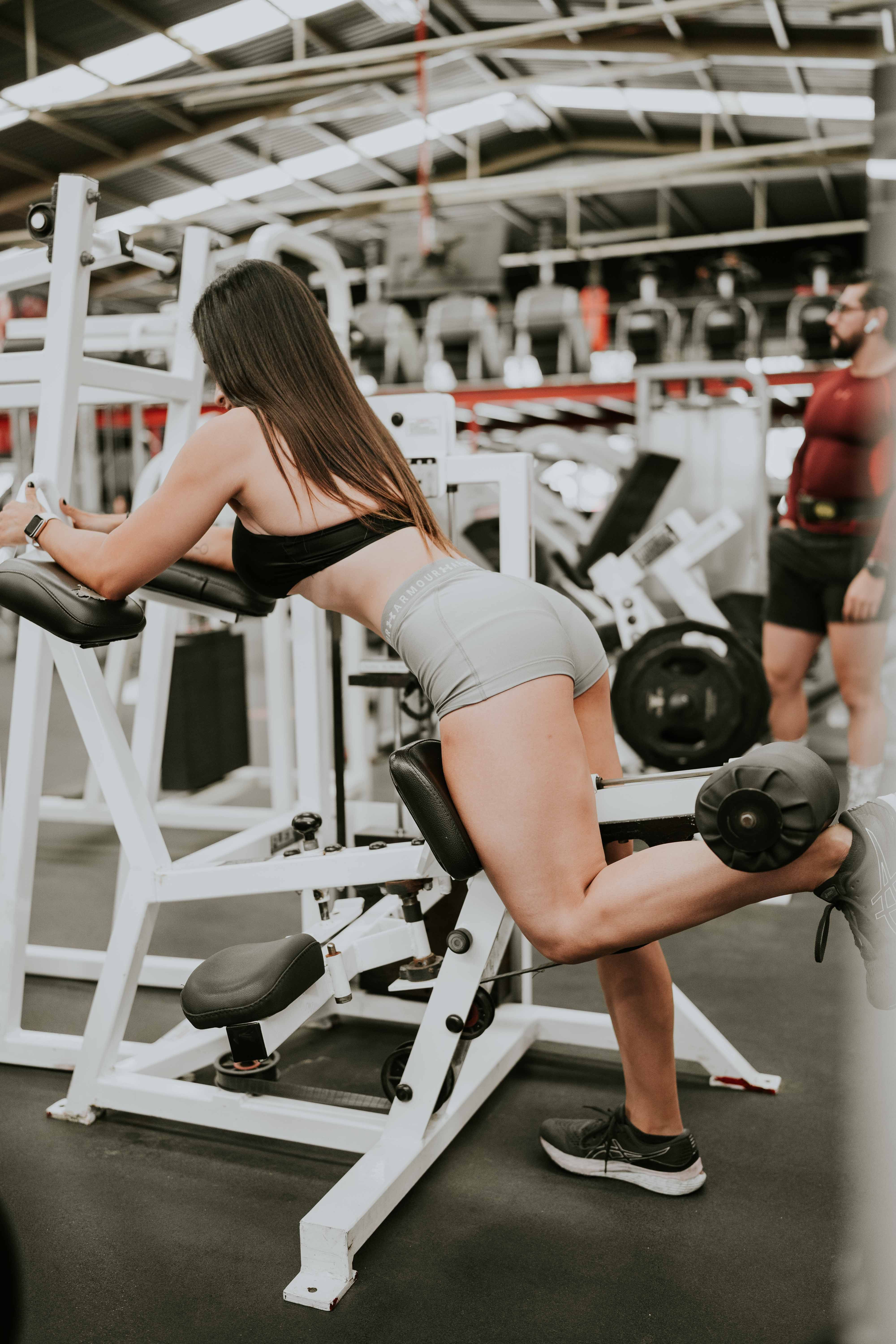
If you want stronger, more developed legs, the leg curl machine is one of the most useful pieces of equipment to include in a lower-body workout. Unlike compound exercises such as squats, the leg curl allows you to directly train the muscles at the back of your thighs.
The exercise is commonly used for hamstring strength, muscle development, lower-body conditioning, and balanced leg training. Both lying and seated versions can be effective when the machine is adjusted correctly and the movement is performed with control. The American Council on Exercise has also identified the prone machine leg curl as an effective exercise for activating the hamstrings.
Whether you are new to strength training or an experienced gym-goer, understanding how to use a leg curl machine can help you get more from your workout.
What Is a Leg Curl Machine?
A leg curl machine is a resistance-training machine designed primarily to work the hamstrings, which are the muscles located along the back of the thighs.
Depending on the machine, you may perform the exercise while lying face down, sitting upright, or standing. The basic movement involves bending your knees against resistance and bringing your heels toward your body.
The hamstrings play an important role in knee flexion and hip movement. A machine leg curl provides a controlled way to emphasize the knee-flexion function of these muscles.
What Muscles Does the Leg Curl Machine Work?
The primary muscles worked by a leg curl machine are the hamstrings. This group includes the biceps femoris, semitendinosus, and semimembranosus.
The exercise can also involve the calf muscles because the gastrocnemius crosses the knee joint. Depending on the variation and technique, other lower-body muscles may contribute as stabilizers.
Because the movement focuses heavily on knee flexion, the leg curl is particularly useful as an isolation exercise within a complete lower-body workout.
Benefits of the Leg Curl Machine
1. Targets the Hamstrings
One of the biggest advantages of a leg curl machine is its ability to focus directly on the hamstrings.
Compound exercises train multiple muscle groups at once, while the leg curl provides a more targeted movement. This makes it useful when you want to give your hamstrings additional training volume.
2. Supports Balanced Leg Training
Many lower-body workouts emphasize exercises such as squats, lunges, and leg presses. Adding leg curls can provide dedicated hamstring work and help create a more balanced training program.
ACE-sponsored research found the prone leg curl to be particularly effective among the hamstring exercises tested.
3. Easy to Learn
The machine provides support and a defined movement path, making leg curls accessible to many beginners.
Once the machine is adjusted correctly, you can concentrate on moving the resistance with your legs rather than worrying about balance.
4. Useful for Strength and Muscle Development
Progressive resistance training can help improve muscular strength and size. The leg curl can therefore be included in programs designed for general fitness, bodybuilding, sports conditioning, or lower-body strength.
5. Offers Different Training Options
Many gyms have lying, seated, or standing leg curl machines. Some machines also allow single-leg training, which can be useful when you want to work each side independently.
How to Use a Leg Curl Machine Correctly
Proper setup is essential for both comfort and effective training.
Step 1: Adjust the Machine
Before starting, adjust the machine according to your body size. Your knee should be positioned appropriately relative to the machine’s pivot, while the roller should sit against the lower part of your leg near the ankle or Achilles area, depending on the machine design.
Step 2: Secure Your Position
For a lying leg curl, lie face down and keep your hips against the pad. For a seated leg curl, sit firmly against the backrest and secure the thigh pad according to the machine instructions.
Step 3: Curl the Weight
Brace your body and curl your lower legs toward your glutes. Focus on contracting the hamstrings rather than using momentum.
Step 4: Lower the Weight Slowly
Return the resistance to the starting position under control. Avoid simply allowing the weight to drop.
NASM recommends maintaining body position and avoiding excessive lower-back arching during the movement.
Seated vs. Lying Leg Curl Machine
Both variations train the hamstrings, but they offer different setups.
Lying Leg Curl
The lying leg curl machine is performed face down. It is a classic hamstring isolation exercise and has been used extensively in strength-training programs.
Seated Leg Curl
The seated leg curl machine is performed upright with your back supported. The position provides additional trunk support while allowing you to focus on knee flexion.
Neither variation needs to be considered universally superior. You can choose based on comfort, equipment availability, training goals, and how your body responds.
Common Leg Curl Machine Mistakes
Avoiding common mistakes can make the exercise more effective.
Using Too Much Weight
If you need to swing your body or move quickly to complete repetitions, the resistance may be too heavy.
Choose a weight that allows you to maintain controlled technique.
Moving Too Quickly
Fast repetitions can reduce your ability to control the resistance. Perform each repetition smoothly and focus on the working muscles.
Lifting Your Hips
During a lying leg curl, lifting your hips away from the pad can change your body position and reduce movement quality. Keep your hips stable throughout the exercise.
Incorrect Machine Setup
Poor positioning can make the movement uncomfortable and may place unnecessary stress on your joints. Take time to adjust the machine before beginning your set.
How Many Leg Curl Reps Should You Do?
The appropriate number of repetitions depends on your fitness goals and overall training program.
For general strength and muscle development, many gym programs use moderate repetition ranges with controlled resistance. Beginners should prioritize learning the movement and finding a comfortable load before attempting heavy weights.
Rather than focusing only on a specific number, use a resistance that allows you to perform the exercise with consistent technique.
If you are new to resistance training, a qualified fitness professional can help you select appropriate resistance, repetitions, and training frequency.
Can You Do Leg Curls Every Day?
Most people do not need to train the hamstrings intensely every day.
Muscles need recovery after resistance training, and your overall schedule should account for the other lower-body exercises you perform. Training the same muscles repeatedly without adequate recovery can make it harder to progress.
A balanced program should include appropriate rest and a combination of exercises that train different movement patterns.
Is the Leg Curl Machine Good for Beginners?
Yes, the leg curl machine can be a beginner-friendly exercise. Its guided movement and supported position can make it easier to learn than some free-weight hamstring exercises.
However, beginners should still learn the correct setup and avoid using excessive resistance. If an exercise causes sharp pain rather than normal muscular effort or fatigue, stop and seek appropriate professional guidance.
People recovering from a knee, hip, or hamstring injury should follow advice from a qualified healthcare or rehabilitation professional.
Frequently Asked Questions About the Leg Curl Machine
What does the leg curl machine work?
The leg curl machine primarily works the hamstrings at the back of the thighs. The calf muscles can also contribute during the movement.
Is the leg curl machine good for building hamstrings?
Yes. Leg curls are an effective isolation exercise for training the hamstrings and can be included in a muscle-building lower-body workout. ACE research identified the prone leg curl as an effective hamstring exercise.
Is a seated or lying leg curl better?
Both seated and lying leg curls can effectively train the hamstrings. The best choice depends on your comfort, equipment, training goals, and individual body mechanics.
How do you use a leg curl machine?
Adjust the machine, position your knees and lower legs correctly, stabilize your body, curl the resistance toward your body, and slowly return to the starting position. Avoid swinging or lifting your hips.
Can leg curls strengthen your knees?
Strengthening the muscles around the knee can be part of a well-designed exercise program, but leg curls should not be considered a treatment for knee injuries. Anyone with persistent knee pain should seek professional medical advice.
Are leg curls good for beginners?
Yes. The machine provides a controlled movement and can be easier to learn than some free-weight exercises. Start with light resistance and focus on proper technique.
Can you do leg curls at home?
If you do not have a machine, alternatives include resistance-band hamstring curls, stability-ball curls, or other hamstring exercises. The best option depends on your available equipment and fitness level.
Final Thoughts
The leg curl machine is a simple but effective way to train the hamstrings and add focused isolation work to a lower-body workout. Whether you choose a lying or seated version, proper machine setup, controlled repetitions, and appropriate resistance are more important than simply lifting heavy.
For the best results, combine leg curls with a balanced strength-training routine that includes compound lower-body exercises and other hamstring movements. If you are a beginner, start gradually and consider professional instruction to learn proper technique.